|
Orthodox Observer - July 1997
St. Basil Academy
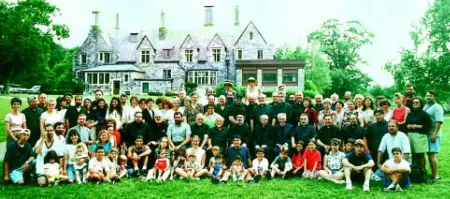
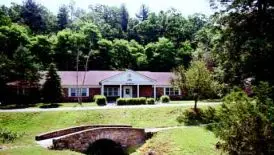
PRIESTS AND their families from New York-New Jersey parishes gather at St. Basil Academy on July 1 for a family day with Archbishop Spyridon. In addition to its official role as an educational center, the Academy serves various Church-related groups for gatherings and retreats throughout the year. (Orthodox Observer photo)

Looking at the situation that the Church will face in the near future, Archbishop Spyridon realized some months ago that we are currently experiencing a shortage of priests which will continue to grow as we move into the future. To address the problem, the Archbishop has been looking at ways to make better use of the existing numbers of clergy, and to open up new avenues of church service to laypersons. This is the basis for the decision to expand the mission of St. Basil Academy into a training center for Greek teachers, parish assistants and youth workers. "We will need more assistants, not the two, three and four priests in certain communities," Archbishop Spyridon said in an interview with the Observer. "In the future, there will be one priest with assistants who are specialized people."
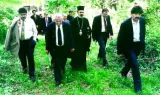
ARCHBISHOP SPYRIDON and mem- bers of the St. Basil Academy board recently made an in- spection visit to the Academy. For some trustees who have served as many as 27 years, it was their first tour of all the fa- cilities. (D. Panagos photo) With the ever-increasing responsibilities the average priest faces, this solution will provide them and their parishes with much-needed help. "This new program will be able to supply assistants to the communities who are adequately prepared for the field of religious education, youth ministry and parish administrative duties," His Eminence said. With the Academy assuming that role, it will enable the Archdiocese to use its clergy in a more efficient manner. The Archbishop said that the assistants can be especially helpful in religious education —teaching both children and adults— and that his desire is for them to combine the three areas —Greek education, parish administration and religious education— to work in communities on a permanent basis at full salary. He added that students will be trained in Greek education to meet the needs and "understand the reality, problems and agonies" of the Greek Orthodox community in America. "Others not trained by us, the Archdiocese, will not be able to do this," the Archbishop said. St. Basil's other role For the children who will continue to be boarded here, the combination of a Greek teachers college and afternoon school will provide "something happy and wished for," His Eminence noted. "Ultimately, it will lead us to have an exemplary Greek elementary school system." Students in the teachers college will apply the concepts they learn to the laboratory setting of the afternoon Greek school where they can work directly with children on a daily basis.
The Archbishop also stressed the need for attracting more children of Greek Orthodox background who need a proper home. "We should really start looking for needy children who have ended up in state institutions and forgotten," His Eminence said. "This is the best way to serve our community, instead of going out and getting children who are not truly needy." He added, "By doing all this (padding enrollment numbers with children who are not needy) we fool our community and ourselves, and by doing this we are very dishonest with our Church and unrealistic. This doesn't take care of our future." Director's assessment In discussing the immediate goals of the Academy, the Very Rev. Sylvester Berberis, director, said that between 20 to 25 children will return to the campus this fall and efforts are under way to attract more. The school has the capacity to house as many as 120 students. The children will attend local schools while receiving their religious and cultural education at the Academy's afternoon school. In the public schools the children "will have the opportunity to be in programs too cost-prohibitive to operate at St. Basil's," he said. Students enrolled in the teachers college will spend their first year immersed in Greek language study under Dr. Andreas Zachariou, the recently appointed head of the program. Other practical training includes the areas of computers, office skills, and accounting. Students will be able use this training in parish offices and the Academy's administration building during the time of their enrollment at the school. Progress made Only a few months since his appointment, Fr. Berberis already has taken several steps to enable the Academy run more efficiently. He has trimmed the full-time staff to seven, one-third of what it had been in the past. There are plans for refurbishing and new construction to prepare the Academy for the fall, and bids are expected for repairs to the main administrative building, to the home of former Archbishop Michael and other facilities. Another area Fr. Berberis seeks to improve is the water service. Presently the Academy uses well water for all but drinking and cooking. But the priest said plans call for getting water from the New York water system. "We are now buying water for drinking purposes," said Fr. Berberis. "It is expensive but necessary." He also noted that the water delivery system is in need of replacement. "The pipes, which are nearly 100 years old, are clogged and corroding," he said. Facilities still used
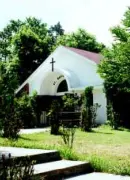
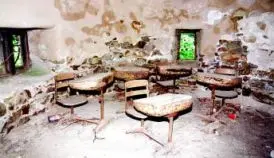
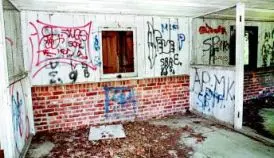
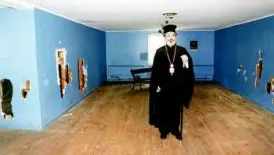
THE CHAPEL of St. Basil serves as the house of worship for children and staff of the Academy. Its construc- tion was made possible by Great Benefactor Wil- liam Chirgotis of New Jer- sey. (Orthodox Observer photo) The various buildings, such as the AHEPA school, the dormitories, gymnasium, library and other buildings will continue to be used, Fr. Berberis explained. However, there are several structures requiring extensive repairs due to years of neglect or outright vandalism. He cited other facilities, including the soccer field and tennis courts, administrator's home, and former chapel as needing extensive refurbishing. "Four staff members' apartments were renovated by the late Bishop Philip of Atlanta," said the priest, "but the rest are not operable." As for the prospects for the fall semester at the teachers' college, Fr. Berberis is optimistic. He already has nine applications from people around the country. One applicant has an advertising background and works for a small college in Minneapolis. Another person lives in New Hampshire and said in her letter that she wants to become involved in parish administration and to improve her Greek.

Tuition is being kept to a low $6,000 a year, with the possibility of adjustment or waiving if a student becomes employed at a parish. "We'd like to offer everyone the opportunity to learn the language," Fr. Berberis said. "It is open to anyone who wants to study Greek and learn the language." Fund-raising is an ever-present concern to the director. Currently, the National Philoptochos gives $25,000 month; the Archdiocese, $10,000 month. Christmas and Easter fund drives are to continue. Church officials see the development of St. Basil Academy in its new, dual role as proving to be one of the most significant developments in the Archdiocese in decades and a positive step in improving the spiritual and cultural education level of the Greek Orthodox communities in America. J.G.
[ Orthodox Observer, Vol. 62 - No. 1131, July 1997, pp. 6, 7 ]
|

|
|
|
|